
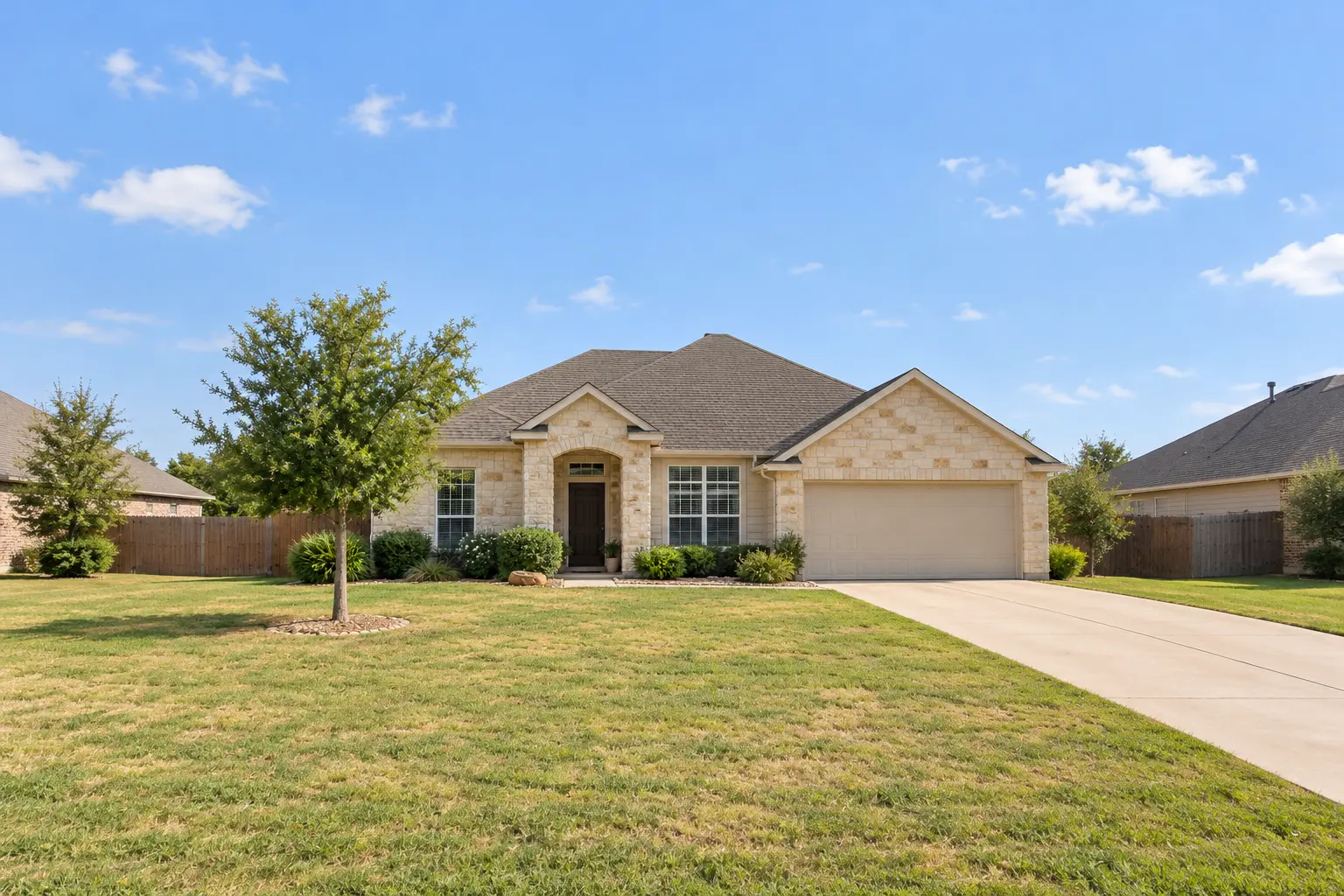
Round Rock, Georgetown, Pflugerville and nearby
Foundation Repair in Round Rock, TX
Rock on one side of I-35, clay on the other: straight answers and a free inspection.
A crack that wasn't there last month, or a door that suddenly won't latch, is an uneasy thing to find. You're far from the only one finding it. Round Rock homeowners applied for 195 residential foundation repair permits in the first 11 months of 2025, according to the city's own monthly permit reports.
- Free inspection
- No obligation
- Town-by-town soil data
- Referral service, disclosed
- Call (737) 259-7007
What have you noticed?
Round Rock is also a good place to see why. A 2007 University of Texas study of the city's bedrock found that Round Rock "sits astride the break" between two very different kinds of ground. Which side your house sits on shapes what tends to go wrong, and what fixes it.
A free inspection from a local foundation repair professional is one call or one short form away.
Which Side of I-35 Is Your House On?
West of Round Rock, many houses sit on a thin layer of stony soil with limestone just underneath. To the east, they rest on deep, dark clay that grows when it's soaked and shrinks back as it dries out. NASA's caption for an astronaut photo of central Texas describes Interstate 35 as a rough guide to that change: the highway "generally parallels the Balcones escarpment," with limestone uplands to the west and Black Prairie to the east.
We checked the USDA soil survey at 25 points in each town and counted how many landed on soil with a very high shrink-swell reading. The split roughly follows the highway:
West of I-35
Mostly on limestone
- Cedar Park0%
- Leander4%
- Brushy Creek4%
- Liberty Hill4%
- Georgetown8%
East of I-35
Mostly on clay
- Hutto56%
- Pflugerville64%
- Taylor68%
- Manor92%
On the break: Round Rock 24%
The USDA measures shrink and swell as linear extensibility, the percent a soil grows or shrinks between wet and dry. Anything above 9 is rated very high, and anything below 3 is rated low.
Round Rock itself has a bit of everything. In our sample:
- Houston Black clay, 16%, reads 12.0 from the surface down, and the survey finds no rock in the top 80 inches. That's a lot of clay under a slab, and all of it gains and loses volume as the seasons turn.
- Heiden clay, 8%, reads 17.0, the highest reading we found under the city.
- Eckrant, 16%, is a stony clay with limestone bedrock about 11 inches down. It reads 6.0, but there's very little of it between the slab and the rock.
- Austin silty clay, 20%, formed from chalk. It reads 5.1, a moderate number, with softer rock about 29 inches down.
So two Round Rock houses in different parts of town can have quite different stories. On rock that close, cracks deserve a look at other suspects as well, especially water pooling against the foundation. Our Round Rock soil guide shows how to look up the soil under your own lot.
Signs Your Foundation Is Moving
Foundation movement rarely starts with anything dramatic. These are the small things people tend to notice first:
- An interior door that drags, swings on its own, or won't latch
- A crack running up from the corner of a door frame or window
- A zig-zag crack in brick or stone that follows the mortar
- A gap opening under the baseboards
- Floor tiles cracking in a line
- A window that sticks partway or won't lock
One crack on its own doesn't mean your foundation is failing. The real question is whether it's getting bigger. Draw a short pencil line across each end and write the date beside it, then look again in a month. HUD's inspection guidance says that cracks with clean edges suggest recent movement, while dirty or filled cracks may have stopped moving.
The calendar can help too. The NOAA weather station just northeast of Round Rock records most of its rain in May (4.67 inches on average) and October (4.07 inches), with only 2.04 inches in July. At Georgetown Lake, the nearest station with temperature records, August averages a high of 96.8°F. Clay dries out through that long, hot middle of the year. If a crack widens through August and tightens up again once October's rain arrives, the soil under the slab is likely swelling and shrinking with the year.
Seeing more than one of these at once? When signs start stacking up, it's worth getting the floors measured.
Our Foundation Repair Services
- Slab foundation repair Support for a concrete slab that has dropped, whether the ground below is clay or rock.
- Pier and beam repair Raised floors over a crawl space, a way many older Texas homes were built.
- House leveling Bringing sloping floors back toward level when the whole house has shifted.
- Foundation inspection A measured look at the floors and walls, so any repair starts from facts.
- Foundation crack repair Working out which cracks are only skin deep and which point to movement.
What Round Rock Homes Are Built On
Round Rock has 49,133 homes in the Census count, and half of them were built after 2001. Building took off in the 1990s and hasn't really slowed: 20.6% of today's homes date from that decade, 28.6% from the 2000s, 22.6% from the 2010s and 3.0% from 2020 on. That's 74.8% from 1990 or later. Just 1.6% are older than 1960.
A build year says nothing about the foundation itself, so the Census can't tell you how many of these homes sit on slabs. What we can say is that in Texas, many newer slabs are post-tensioned: steel cables run through the concrete and are pulled tight. Anyone drilling into one needs to know where those cables are first. An inspection can tell you what's under your floors.
Older houses are more common in some of the smaller towns, especially to the east. The median home in Taylor was built in 1978, and in Elgin in 1979. Many older Texas homes were built as raised pier and beam houses, so if yours is one of those towns' older homes, it's worth finding out which kind you have.
- 2001Median year Round Rock homes were built
- 1.6%Built before 1960
- 74.8%Built in 1990 or later
Source: US Census Bureau, American Community Survey 5-year estimates, 2023.
Over the Edwards Aquifer?
Part of Round Rock sits over the Edwards Aquifer recharge zone, where rain can soak down through cracks in the limestone into the aquifer. We checked the Texas Commission on Environmental Quality's Edwards Aquifer map at the same 25 points in each town. In Round Rock, 40% of the points landed on the recharge zone and 24% on the transition zone next to it. Georgetown came in at 92% and Brushy Creek at 84%. None of the points in Hutto, Manor, Taylor or Elgin fell in any zone.
The state's Edwards Aquifer rules cover construction and digging on the recharge zone, and they leave out routine upkeep of an existing building that doesn't disturb more of the site. We haven't found a TCEQ answer on where repair piers fall between those two, so it's worth asking before any digging starts. TCEQ's Austin office covers Williamson and Travis counties at 512-339-2929. Our Edwards Aquifer guide explains the zones and the rules.
Who to Call First
Both are reasonable first calls. Repair companies tend to inspect at no charge and can say soon whether work is needed. A structural engineer who works for you alone will usually bill for the visit, and in return has nothing to sell you, which is useful if you want an independent check on a large quote.
In Round Rock, an engineer ends up involved either way. The city won't issue a foundation repair permit without a plan sealed by the engineer in charge of the job. Our engineer or repair company guide compares the two routes in more detail.
How a Referral Works
1. Share what you're seeing. Phone (737) 259-7007 or fill in the short form. A sentence or two about what changed, and roughly when, is plenty.
2. A professional near you follows up. Your request goes to a foundation repair professional who covers your area, who'll arrange a free inspection.
3. You choose what happens next. You'll hear what they found. Whether to go ahead, and with whom, is up to you, and comparing quotes is always fine.
We don't do repairs ourselves. We connect homeowners with professionals, who may pay us for each request we send, as our referral marketing disclosure sets out.
What Foundation Repair Costs Around Round Rock
Wanting a ballpark before anyone comes out is completely reasonable. Published prices around Austin and Round Rock give a feel for it, though they don't agree with each other.
- A Texas repair company's 2026 Austin cost guide lists $350 to $500 per pressed concrete piling, $400 to $650 for steel and $450 to $700 for a helical pier, with whole jobs from $4,000 to $10,000 depending on the type.
- Another Texas company with a Round Rock office says most Austin homeowners pay about $3,500 to $12,000, and lists about $1,000 to $3,000 per pier.
The same pier can be priced very differently, so it helps to ask what each line of a quote covers. That includes the permit. One of those guides budgets $150 to $500 for a building permit, while the City of Round Rock's published fee for a foundation repair permit is $125. The engineer's plan is a separate cost, and one guide puts an engineering report at $500 to $1,500.
What moves the price most is the number of piers, and only a floor survey can tell you that. Compare the quotes that come after someone has measured. More on what foundation repair costs.
Permits in Round Rock
The City of Round Rock requires a building permit to repair a building, and foundation repair has its own permit type. Applications go through the city's online permit portal. The same rule covers the Chandler Creek and Vista Oaks municipal utility districts.
Here's what the city asks for:
- A sealed plan. The application needs an "Assumption of the Engineer of Record" letter and an engineered foundation plan with the engineer's seal and signature.
- A report at the end. Before the final inspection, a final engineered report has to be uploaded to the permit record.
- A $125 fee. The city calculates it once the application is accepted.
- Registered contractors. Every contractor on the job registers with the city, at no charge, and Round Rock issues one permit that names all of them.
Those steps work in your favor, because an engineer has looked at the plan before the work and at the result after it. Each town around Round Rock handles this its own way, and our permits guide goes through them.
Towns We Serve
We serve Round Rock and the towns around it in Williamson, Travis and Bastrop counties.
- Mostly on limestone: Brushy Creek, Cedar Park, Georgetown, Leander and Liberty Hill
- On the break, like Round Rock: Wells Branch
- Mostly on clay: Pflugerville, Hutto, Manor, Taylor and Elgin
The ground changes quickly across that area. Manor's sample was 92% very high shrink-swell clay, and Cedar Park's had none. See all service areas.
Common Questions
What's under my house in Round Rock, clay or rock?
It could be either, sometimes from one street to the next, because Round Rock sits on the break between the two. Look it up: the USDA's Web Soil Survey is free and works by address, and our soil guide walks through it.
Does Round Rock require a permit for foundation repair?
Yes. The city has a foundation repair permit type, with a $125 fee, an engineer's sealed plan up front and an engineered report before the final inspection.
Is foundation watering allowed under Round Rock's drought rules?
Round Rock's drought plan allows watering by hand-held hose at any time outside a drought stage. In Stages I and II, foundation watering follows your watering schedule. In Stage III, it's allowed only with a hand-held hose, once a week on your schedule. Check the city's current stage first, and see our foundation watering guide for the details.
Does Texas license foundation repair companies?
No. Texas has no state license for foundation repair companies, and a 2013 bill to create one didn't pass. Round Rock does require every contractor on a permit to be registered with the city, and the repair plan has to carry an engineer's seal.
Am I committed to anything after a free inspection?
Not at all. You pay nothing for it and owe nothing after it. If the movement is small, watching it may be all you need.
Get a Free Foundation Inspection in Round Rock
Send us a few words about what you've noticed. We'll put you in touch with a professional who works in Round Rock, who can measure, explain the results and lay out your choices. The visit is free, and you don't owe anyone anything afterward.
What have you noticed?